
How to Choose the Right Tent Size When You Rent a Tent on Long Island
One of the most common calls we get after a booking is confirmed goes something like this: “I think we might need a bigger tent.” By that point, the date is locked in and options are limited. Knowing how to size a tent correctly before you rent a tent on Long Island saves you from that conversation entirely. This guide walks through the actual formulas, the Long Island-specific yard considerations that most guides skip, and the structural differences between tent types that should factor into every backyard booking.
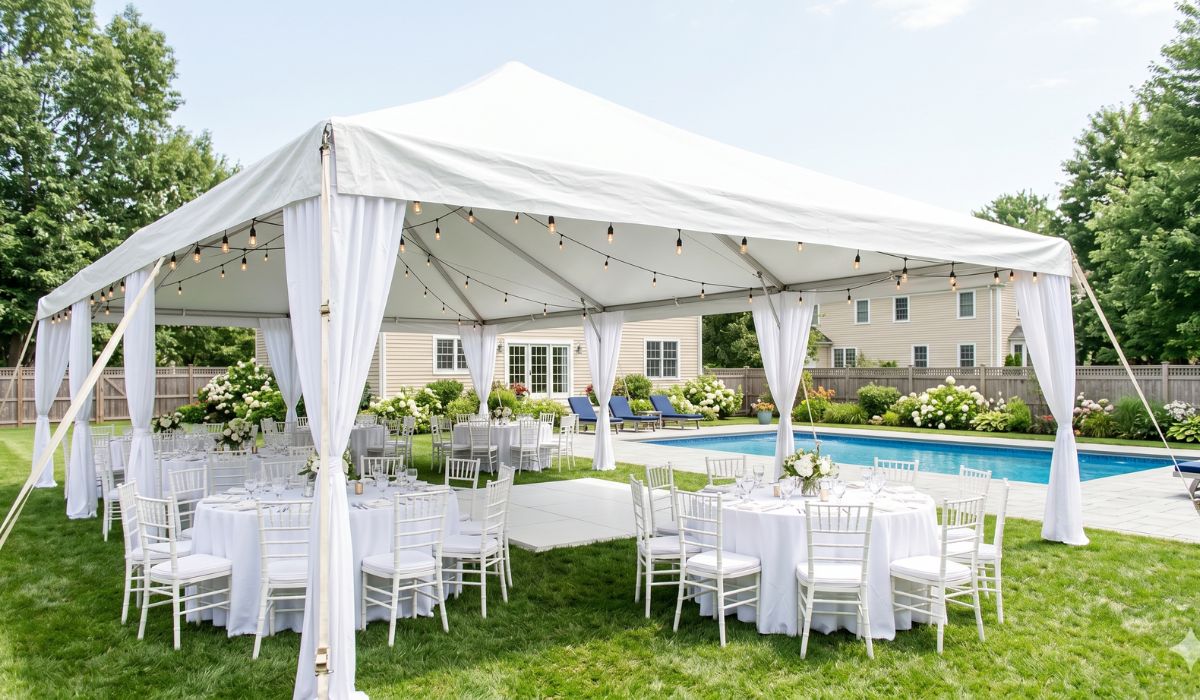
Tent Sizing Is Not Guesswork – It Is a Formula
Every tent sizing decision starts with two numbers: your guest count and your event format. The layout you choose determines how much square footage each guest actually needs, and those numbers are not interchangeable.
Square Footage by Event Format
The three most common backyard event layouts each require a different amount of floor space per person. Using the wrong formula is how hosts end up with a tent that technically fits the guest count but leaves no room to move.
| Event Format | Sq Ft Per Guest | Tent Size for 50 Guests | Tent Size for 100 Guests |
|---|---|---|---|
| Seated Dinner (round tables) | 12 to 15 sq ft | 20×30 (600 sq ft) | 20×60 or 30×40 (1,200 sq ft) |
| Cocktail Style (high tops, mingling) | 8 to 10 sq ft | 20×20 (400 sq ft) | 20×40 (800 sq ft) |
| Buffet Layout (tables + serving area) | 15 to 18 sq ft | 20×40 (800 sq ft) | 30×60 or 40×40 (1,400 sq ft) |
These figures account for the guests and the furniture. What they do not automatically include is space for a DJ setup, a dance floor, a bar station, or a dessert table. Each of those elements adds 50 to 100 square feet to your footprint. Build those into your calculation before you finalize a tent size.
For a deeper look at industry-standard sizing guidelines, the tent size reference guide from Tent and Table and The Knot’s wedding tent size guide both offer useful benchmark charts.
How Long Island Yards Change the Equation
Standard tent sizing formulas assume a flat, unobstructed open space. Most Long Island residential properties are not that. The lot configurations across Nassau County in particular introduce variables that have to be measured before a tent is ever booked.
Here are the factors that most commonly reduce usable tent space in Long Island backyards:
- In-ground pools. A pool that sits in the center or rear of a yard can eliminate large sections of otherwise usable space. Tents cannot be anchored over water, and safety clearance around pool edges reduces the footprint further.
- Setback requirements. Nassau County municipalities have varying rules about how close structures can be placed to property lines, fences, and the home itself. A tent is considered a temporary structure, but local rules still apply. Checking with your village or town before booking is advisable.
- Slopes and grade changes. A yard that appears flat from the house may have a noticeable grade drop toward the back. Uneven ground affects both tent stability and guest comfort. Some slopes can be accommodated with leveling, but steep grades may limit placement options significantly.
- Overhead obstructions. Mature trees, utility lines, and overhead wiring all affect where a tent can go. This is something a professional installer assesses on-site before setup begins.
The practical takeaway: measure your usable yard space, not your total yard space, before sizing a tent. If you are unsure, a site visit from your rental provider before booking is the most reliable way to avoid a sizing problem on event day.
Frame Tents vs. Pole Tents: Which Is Right for a Residential Property
This is a question that comes up on nearly every backyard tent rental inquiry, and the answer matters more than most people realize before they book.
Pole tents are the traditional style with center and perimeter poles that support the canopy. They create a dramatic, high-peaked silhouette and are well suited to large open grass areas. The trade-off is that the center poles occupy floor space inside the tent, which can interrupt table layouts and sightlines. They also require more staking points around the perimeter, which means more yard space is consumed outside the tent footprint.
Frame tents have a freestanding aluminum frame that supports the canopy without any interior poles. This gives you a completely open floor plan inside the tent, which is a significant advantage for residential events where every square foot counts. Frame tents can also be set up on hard surfaces like patios and driveways where staking is not possible, making them the more versatile option for Long Island properties.
For most Nassau County backyard events, a frame tent is the more practical choice. The open interior makes furniture layout more flexible, and the reduced staking footprint accommodates smaller or more complex yard configurations. You can explore available tent options and configurations through our Long Island party and tent rental inventory.
For larger events such as wedding receptions, the right tent type depends heavily on the specific yard, guest count, and layout goals. Our wedding tent rental packages on Long Island are configured around those variables specifically.
A Real Backyard Scenario: Before and After Sizing
A family in Nassau County planned a graduation party for 75 guests in their backyard. Their initial instinct was a 20×30 tent based on an online calculator. On-site, the usable yard space was reduced by a pool, a built-in grill station, and a mature oak tree that limited anchor placement. The actual footprint available was closer to 500 square feet of clear, level ground.
After accounting for a buffet table, a DJ table, and adequate walking clearance, the correct tent for that space was a 20×40 frame tent placed along the side yard, which had cleaner access and better ground conditions. The event ran smoothly. The original tent choice would have left guests with no room to navigate around the buffet line.
That kind of on-the-ground assessment is what separates a professional rental install from a DIY estimate. Our event planning tips cover more of these setup considerations in detail, and our full party and event rental services page outlines everything available for your event.
For additional guidance on tent selection, Party City’s tent selection guide is a useful supplementary reference for first-time renters.
Frequently Asked Questions
How big of a tent do I need for 50 guests?
For a seated dinner with round tables, plan for 12 to 15 square feet per guest, which puts you at a 20×30 tent as a baseline. If you are adding a buffet, bar, or DJ setup, move up to a 20×40. For a cocktail-style event with the same guest count, a 20×20 may be sufficient if the layout stays simple.
Can I put a tent on my patio or driveway?
Yes, with a frame tent. Frame tents are freestanding and do not require ground stakes, which makes them suitable for hard surfaces. Sandbag anchoring is used instead. Pole tents require staking into soil and cannot be safely installed on pavement.
How far in advance should I book a tent rental in Nassau County?
For spring and summer dates, four to six weeks minimum is the practical standard. June and September weekends in particular fill early. If your event falls on a holiday weekend or involves a larger tent configuration, eight or more weeks out gives you the best selection and flexibility.
Do tent rental companies do site visits before setup?
Reputable providers will assess the yard before confirming a tent size, especially for residential properties with pools, grade changes, or overhead obstructions. If a company confirms a booking without reviewing the actual space, ask how they are accounting for site-specific variables.